A four-person game night in a small living room with no dining table
A measured floor plan and setup checklist for seating four players at a board game in a living room about 12 by 13 feet, using a folding table that stores away afterward.
- Room
- 12 × 13 ft
- Guests
- 4
- Clear path
- 43 in
- Pieces
- 3
As an Amazon Associate I earn from qualifying purchases. Links marked (paid link) go to Amazon.
The floor plan
Living room, 12 ft x 13 ft. Drawn to scale; the bar under the plan measures 4 ft.
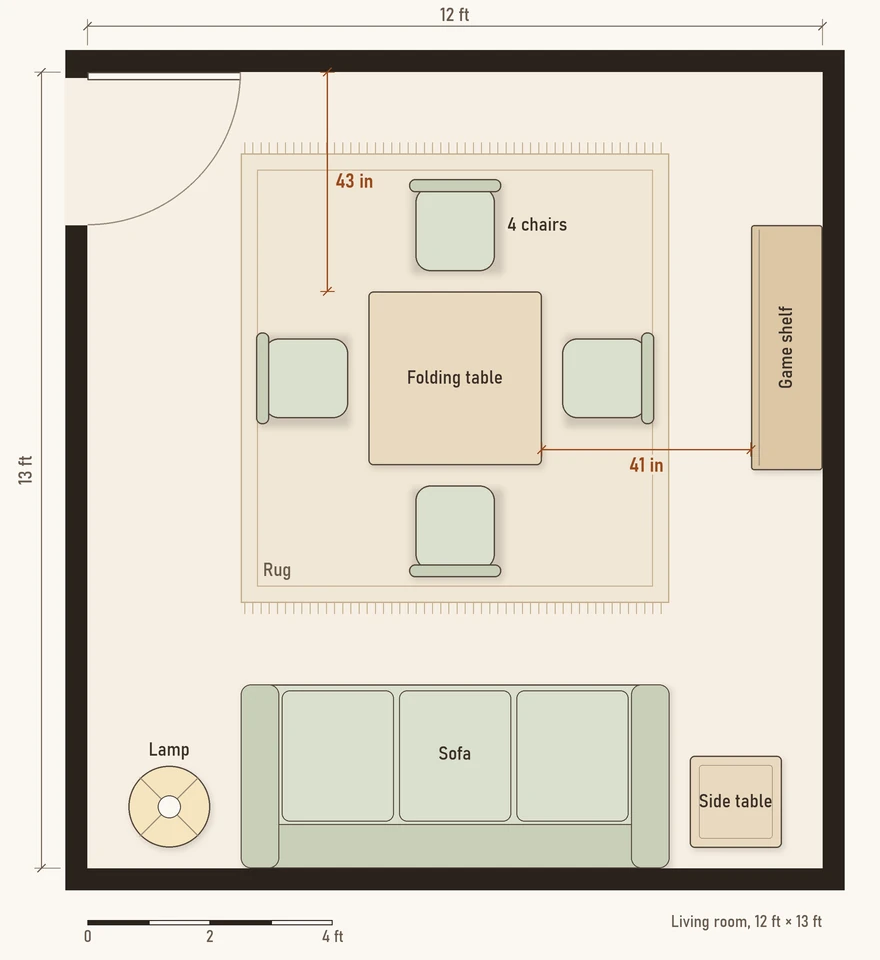
A game night for four doesn’t need a dining room. It needs a table at the right height, enough room to pull out four chairs, and a place to put everything away afterward. This plan uses a living room about 12 by 13 feet with the sofa left where it is.
The setup
How the room works, one piece at a time.
The layout
A folding table goes in the open floor between the sofa and the far wall, with one chair on each side. The table’s top edge sits 43 inches from the wall and the sofa is well behind the bottom chair, so every player can pull out a chair and nobody has to climb over the sofa. A rug under the table and chairs marks the play area and keeps chair legs from scraping the floor.
Before you set anything up, measure your room. The floor plan is drawn on a one-foot grid so you can compare it with your own space. The key number is the distance from each table edge to the nearest wall or piece of furniture: about 32 inches lets a chair pull out, about 36 inches lets someone squeeze past a seated player, and about 44 inches lets them walk past comfortably.
Choosing the table
For four players, a square top around 34 inches holds most board games plus a few cups at the corners. Check the size of the top in the listing, not the folded size, and look at how the legs lock. If you mostly play with two people, a lift-top coffee table can work, because it stays out as normal furniture. For four players, the card table’s full height and bigger surface usually make it the easier choice.
Seating
Ordinary chairs pair with a table 28 to 30 inches high. Folding chairs are the simplest to store, but stools or dining chairs from another room work too. Floor cushions and the sofa are too low for a standard-height table, so keep them for watching, not playing.

Light and snacks
Warm light from a lamp beside the sofa and one more lamp across the room is easier on the eyes than an overhead fixture during a long game. Put snacks on a side table or a tray beside the sofa instead of on the play surface, so nobody has to move the board to reach a drink.

What to measure
Check these in your own room before you buy anything.
34 in square
Table top that seats four for most board games
The most common card-table size (32 and 36 in tops also exist). Check the listing's top size, not the folded size.
Source: Card-table size guides, e.g. upgradedhome.com/card-table-dimensions (checked 2026-09-29)
32 in
Table edge to a wall, so a chair can pull out
The minimum when nobody needs to pass behind a seated player.
Source: NKBA kitchen planning guidelines (seating clearance), checked 2026-09-29
36 in
Table edge to a wall if someone needs to squeeze past a seated player
Enough to edge past sideways. Plan for this where the path to the door runs behind a chair.
Source: NKBA kitchen planning guidelines (seating clearance), checked 2026-09-29
44 in
Table edge to a wall for walking past comfortably
For a regular path behind the chairs, such as the only route to the kitchen.
Source: NKBA kitchen planning guidelines (seating clearance), checked 2026-09-29
28 to 30 in
Table height that works with ordinary chairs
Pair it with seats around 17 to 19 in high; floor cushions are too low for a standard table.
Source: Dining table and chair height guides, e.g. plankandbeam.com (checked 2026-09-29)
Measure the open floor where the table will stand, then subtract 32 inches from each side that has a wall or furniture behind it. What is left is the largest table that still lets every chair pull out. Then measure where the folded table and chairs will live: behind a door, beside a bookcase, or under a bed.
What you need, and why
Each piece solves one problem in this plan. The drawings show where it goes; they aren't product photos.
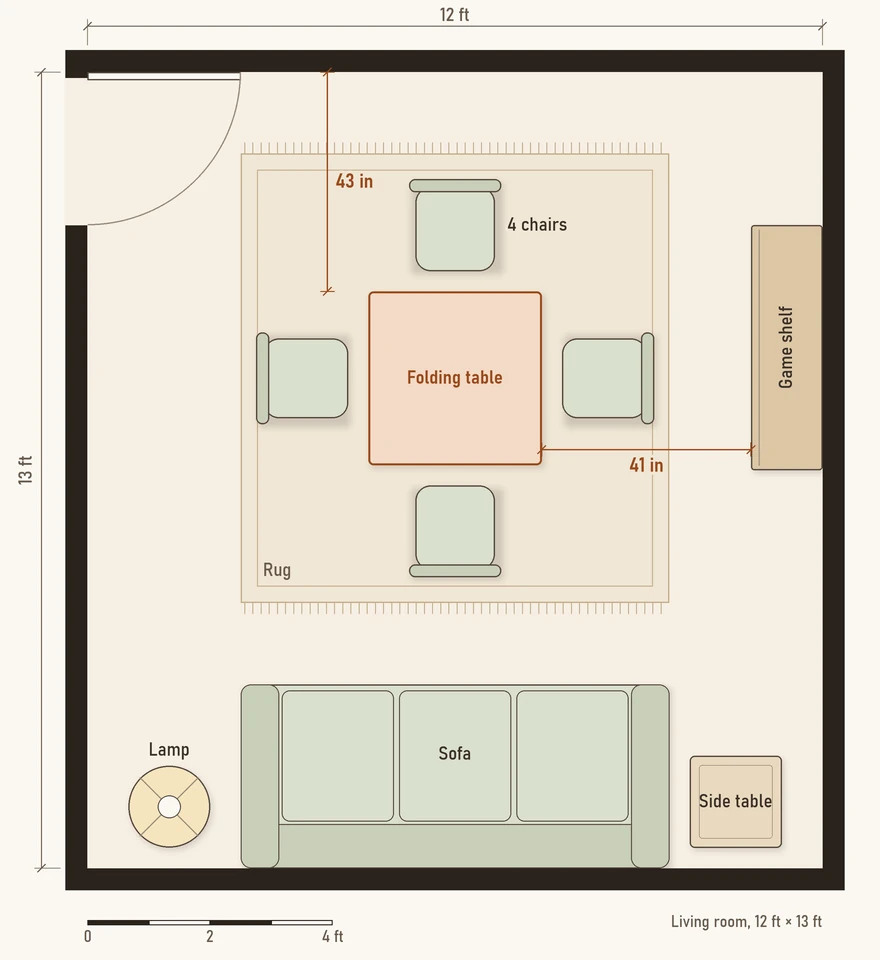
The table
Cosco 34 in square card table, black
A 34 in square top seats four players, and it folds to 1.5 in thick, so it can live behind a door between game nights.
- Table top
- 34 in square
- Folded thickness
- 1.5 in
- Weight limit
- 100 lb
In the plan: the folding table
See it on Amazon (opens in a new tab) (paid link)
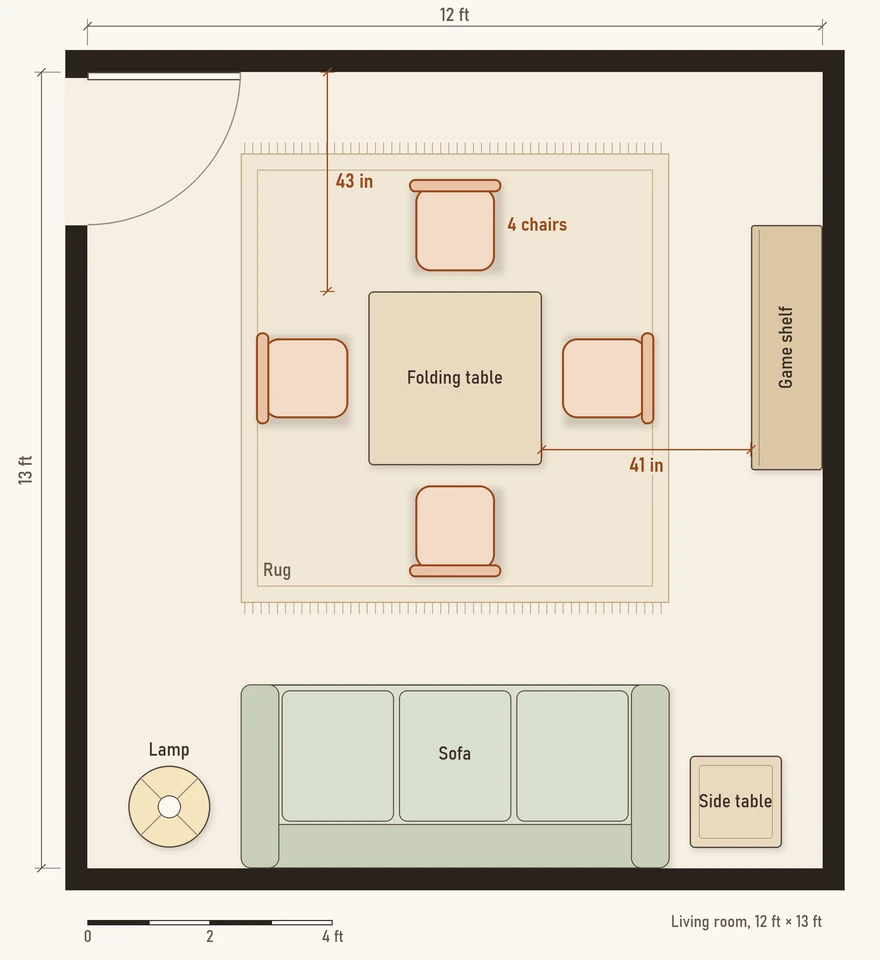
The chairs
Cosco vinyl folding chairs, set of four
Four matching folding chairs, so every player gets the same seat and all four fold away with the table.
In the plan: the chair
See it on Amazon (opens in a new tab) (paid link)
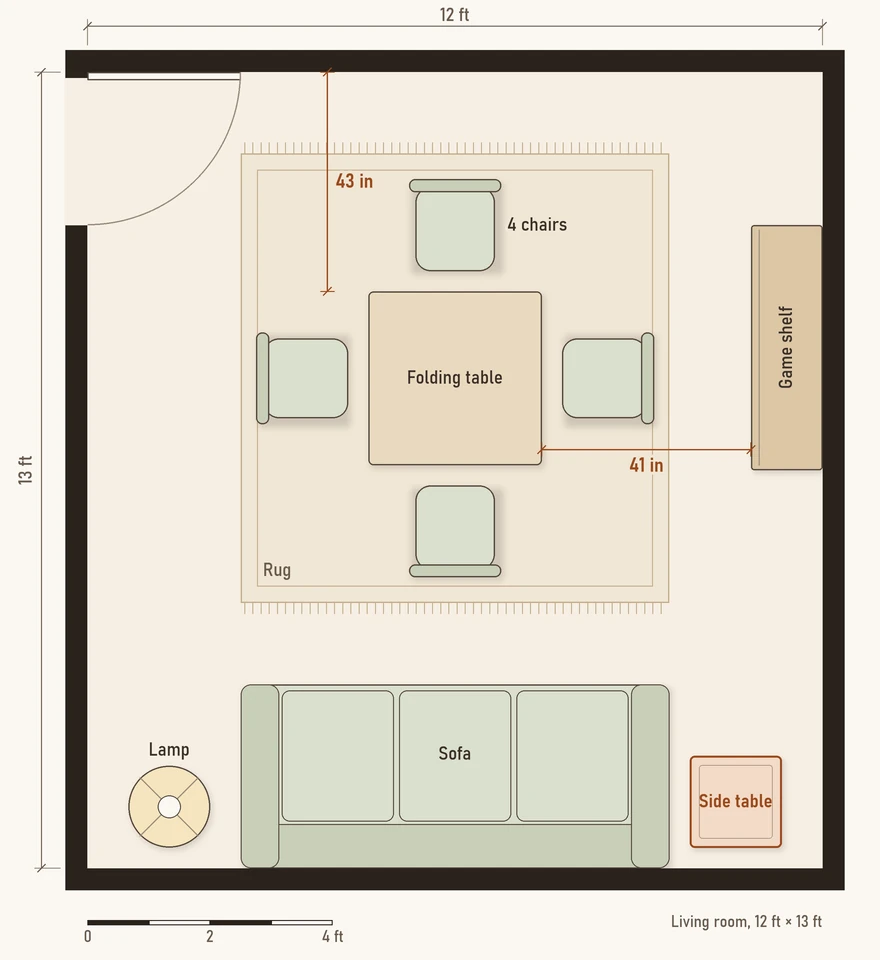
Snack tables
Winsome Dylan 5-piece snack table set
Small tables that sit beside the chairs or the sofa, so drinks and snacks stay off the game board.
- Overall size
- 23.7 x 15.8 x 25.6 in (W x D x H)
- Set
- 5 pieces
- Material
- solid wood
In the plan: the side table
See it on Amazon (opens in a new tab) (paid link)
Before and after
Fifteen minutes before friends arrive
Pack down in five minutes
- Sort pieces into their bags or tray and close the game box.
- Carry cups and plates to the kitchen in one trip on a tray.
- Wipe the table top and fold the table.
- Fold or stack the chairs.
- Slide the table and chairs into their storage spot.
After the game
A five-minute pack-down makes the next game night more likely. Sort the pieces, carry dishes out in one trip, wipe and fold the table, and put the chairs away. The room is back to a living room before your guests are home.
Alternatives
Other ways to solve the same problem, and the trade-offs.
Folding card table or lift-top coffee table?
Folding card table
- Standard table height, so ordinary chairs work
- A 34 in top fits four players and one board
- Folds flat when guests leave
- Needs a storage spot while folded
Lift-top coffee table
- Stays out as everyday living room furniture
- The top lifts up and toward you, so it's easier to reach from the sofa
- Smaller play surface than a card table
- Easier for two players than for four
Shopping list
Every piece in this plan, in one place.
- Cosco 34 in square card table, blackThe table See it on Amazon (opens in a new tab) (paid link)
- Cosco vinyl folding chairs, set of fourThe chairs See it on Amazon (opens in a new tab) (paid link)
- Winsome Dylan 5-piece snack table setSnack tables See it on Amazon (opens in a new tab) (paid link)
We don't show prices or ratings because they change. Check the listing for current details before you buy.
Plans that go well with this one
All plans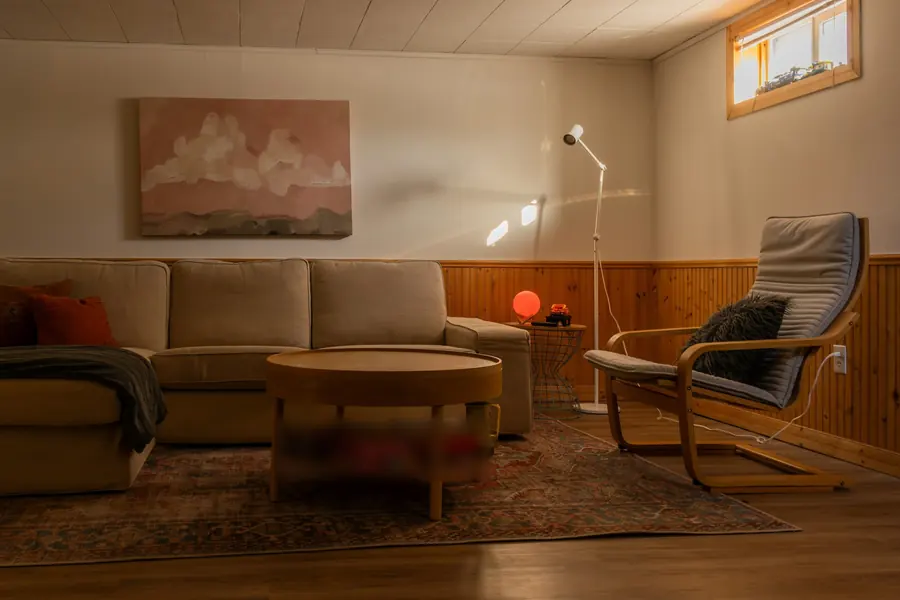
Movie night
Movie night for four
Three on the sofa, one on the ottoman, snacks within reach.
A measured plan for four people watching a movie in a living room about 12 by 13 feet: three on the sofa, one on a storage ottoman, a coffee table that lifts for snacks, and a side table that slides over the sofa arm.
Dinner
Friendsgiving for six
One 6 ft table, three seats a side. It folds away after.
A measured floor plan for a sit-down dinner for six in a living room about 12 by 13 feet: one 6 ft folding table, three seats a side, and enough room to walk behind every chair without moving the sofa.
Apartment decor
Size it right
Five pieces around your sofa, and the measurement for each.
A rug, a coffee table, a lamp, a side table and one extra seat, each with the measurement that makes it fit, drawn in a living room about 12 by 13 feet around the sofa you already have.